
My Journey
I’m Justus Brandt, a metal artisan from Germany with a strong dedication to all things craft.
My goal is to bring skill, artistry, and enduring beauty into every piece I make.
Discover how I got here and some projects from every step of the way below:
Growing up
1999 onwards
The house I grew up in was almost entirely built by my parents - from pouring the concrete foundation to bricklaying, plastering, wallpapering and more. There were few tasks around the home they couldn’t do themselves.
So I was always surrounded by tools, materials, and DIY projects. Interestingly, metalwork was one of the few crafts they didn’t touch (though my grandfather had been a metalworker, so it wasn’t completely foreign).
Sculpting at School
2006-2016
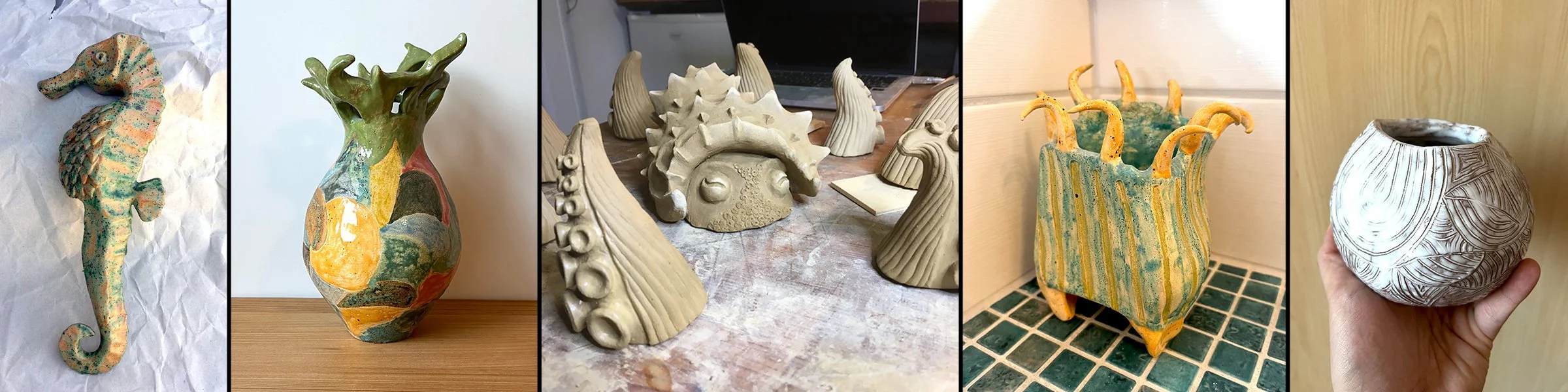
From first grade until shortly before graduating, I was a regular in my school’s pottery club, working with clay once a week.
Between small vessels and occasional figurative pieces, not many remarkable things were made - but I definitely built a foundation for working with my hands and shaping materials in three dimensions.
First contact
2016
Like many teens, I spent most of my high school years online - gaming or watching YouTube. One day, I stumbled across Man at Arms, a channel where weapons from films and games were recreated in metal. I was instantly hooked.
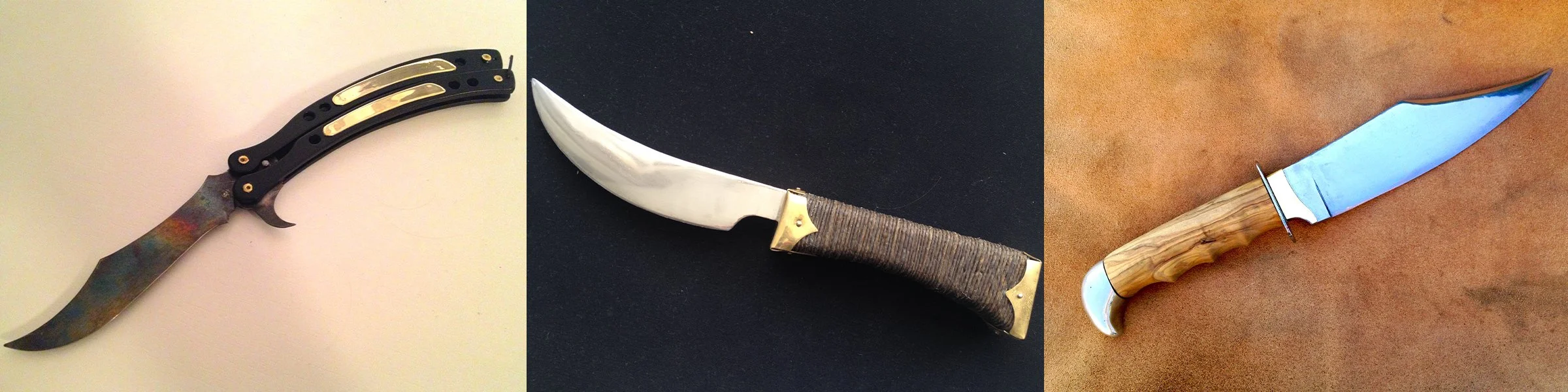
That was the spark. I started making laughably crude knives from scrap sheet metal with nothing more than an angle grinder. Soon I wanted to try blacksmithing.
My first “forge”? A vacuum cleaner jammed into my friend’s fire pit - both of which didn’t survive the process (vaccum and fire pit, the friend is fine).
Eventually, I bought a coal forge and fired it up in my parents’ unventilated garage. After one session (and some mild carbon monoxide poisoning), the forge was retired again…
In the end I made a few knives which weren’t very usable, but visually not the worst.
The grand detour
2018 - 2021
After graduating high school, I briefly considered going straight into a craft career, but ultimately chose the path I’d dreamed of for years: marine biology.
I enrolled at the University of Rostock, where my interests shifted from marine life toward entomology. I even wrote my bachelor’s thesis in that field.
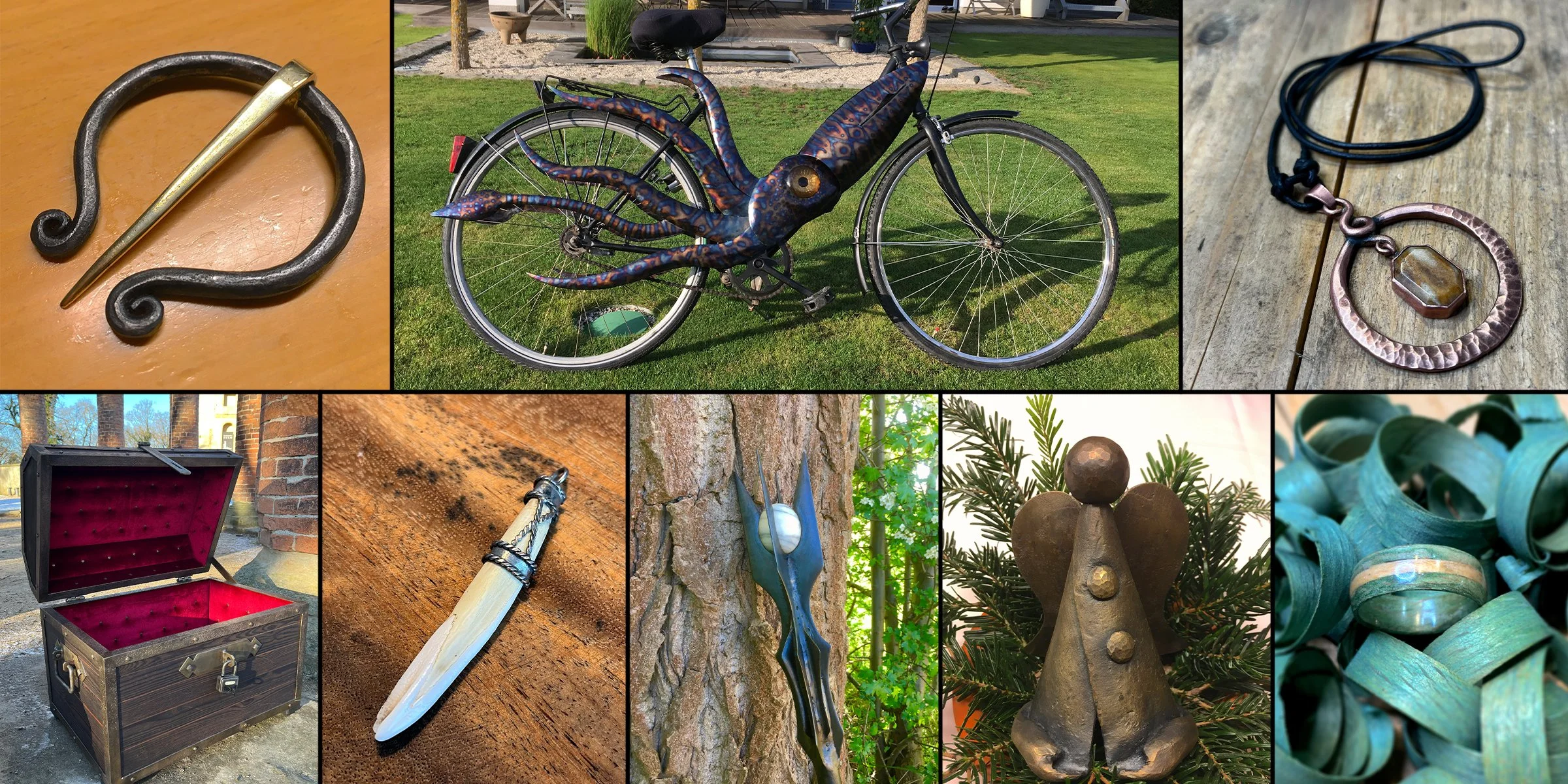
During those years, I kept metalwork alive as a weekend hobby, producing a few pieces I still hold dear.
Despite my genuine interest in science, I eventually decided I didn’t want to pursue it professionally. The work involved too much computer time - data analysis and paper writing didn’t feel satisfying to me as someone who needs to work hands-on.
I did leave one singular academic trace, though: Being listed as the main author of a paper on millipede reproductive organs: [link to article]
Apprentice-ship
2021-2024
Not wanting to approach crafts in a half-baked way, I applied for an apprenticeship in creative metalwork - a field that combines traditional fabrication techniques with design, blacksmithing, sheet metal chasing, and casting.
The German apprenticeship system is remarkable: You spend about half your time working at the company you applied to, learning real-world practical skills while earning a wage. The other half is spent at vocational school, covering the theoretical side of the trade.
The intended duration is 3,5 years, but I was able to finish mine a bit faster.
Admittedly, going back to school alongside teenagers when I already had a university degree was… unique.
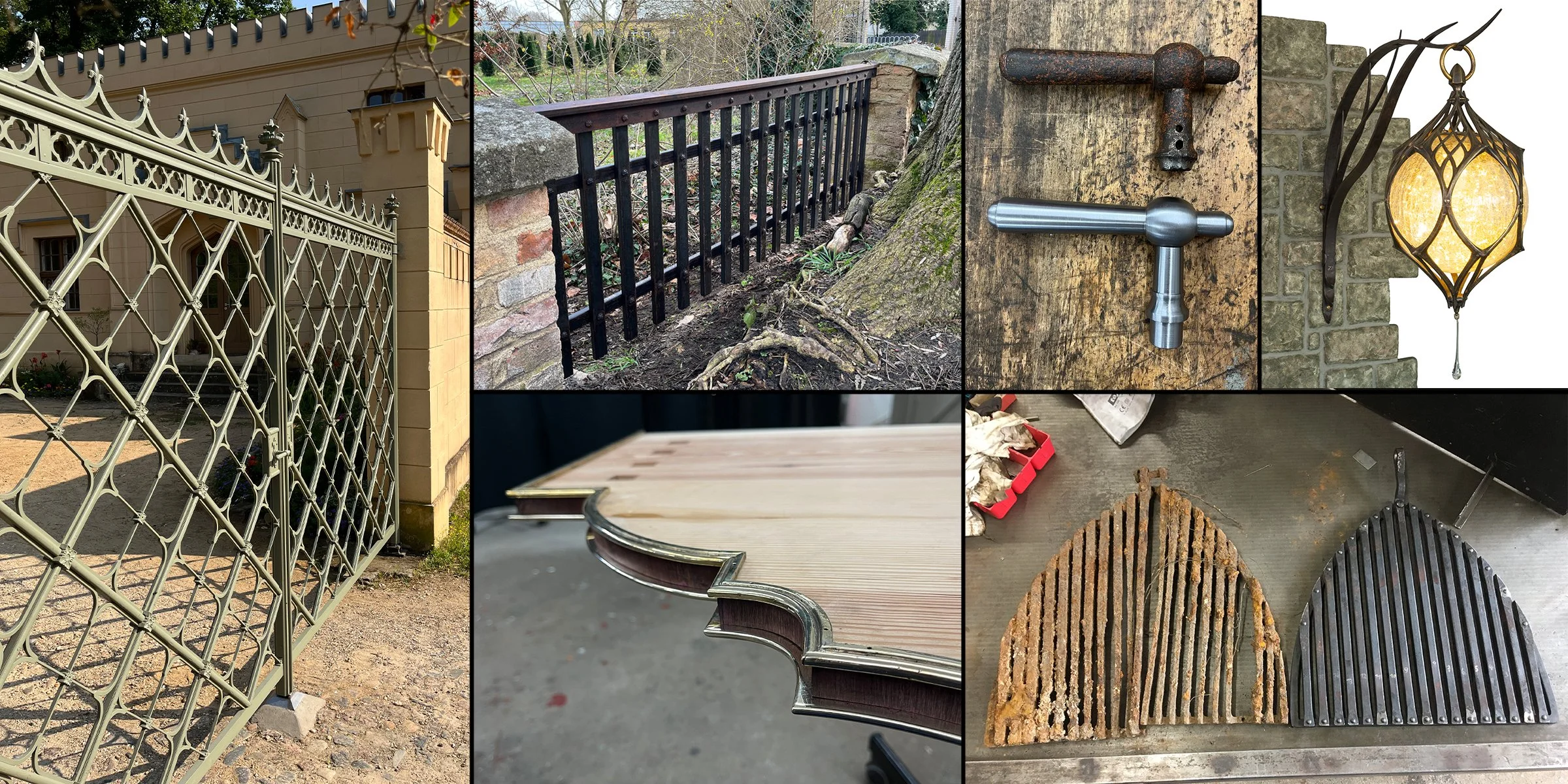
But my employer was exceptional: I apprenticed with the Stiftung Preußische Schlösser und Gärten Berlin-Brandenburg, the foundation responsible for maintaining the historic palaces of the former Prussian kings.
There, I restored and recreated historical metalwork using traditional techniques. My largest project - over a year in the making - was building a 1:1 replica of an historic entrance gate, now installed in Park Babelsberg in Potsdam.
For my graduation project, I designed and built an Elvish-inspired lantern with a cast bronze body and forged steel hanger. I finished my apprenticeship as the top student in my state.
European Internships
2024
After completing my apprenticeship, I used the European ERASMUS+ scholarship program to take part in three internships - each lasting three months - to further hone my technical (and language) skills.
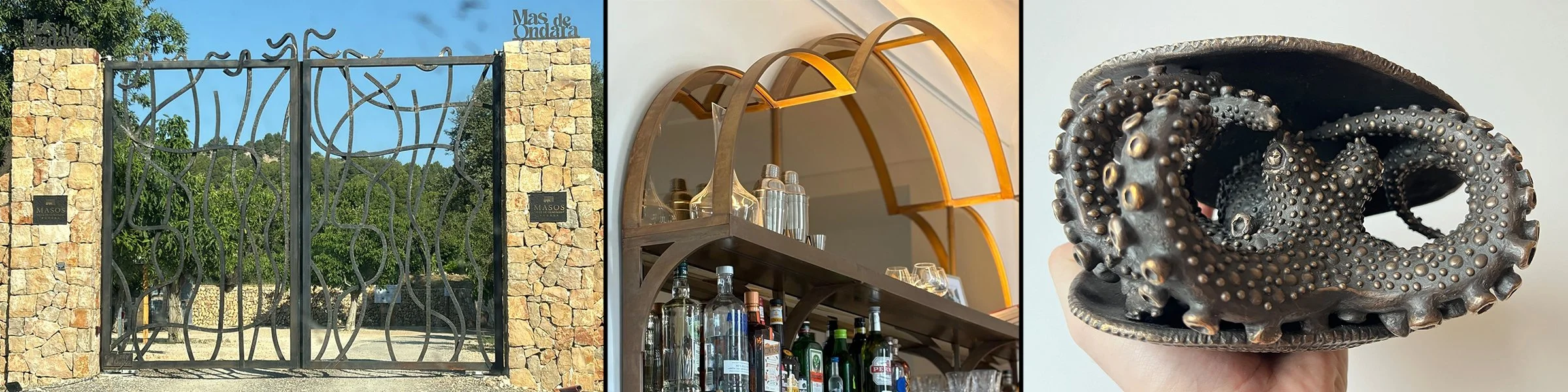
The first stop was Toledo, Spain, where I joined the blacksmiths and metalworkers at Forja Toledo in their day-to-day work. The highlight was helping create a large, ornate gate from massive solid square stock for a coastal vineyard.
Next came Amsterdam, where I worked with Julius Baller, a metal design company specializing in copper and brass. I contributed to restoring historic street lanterns as well as producing modern interior design pieces. The highlight here was fabricating a custom brass home bar, which we installed for a client in Paris.
The last - and possibly most influential - stop was at Kunstgießerei Loderer, a sculpture foundry in Austria. There I learned most of what I know about lost-wax casting and got a unique behind-the-scenes look at the art world. Without that experience, I likely wouldn’t have even considered casting my own sculptures, which is now a major focus for me.
I want to explicitly thank all three workshops for taking me in and sharing their knowledge. Those nine months were incredibly valuable for me.
Master School
2025
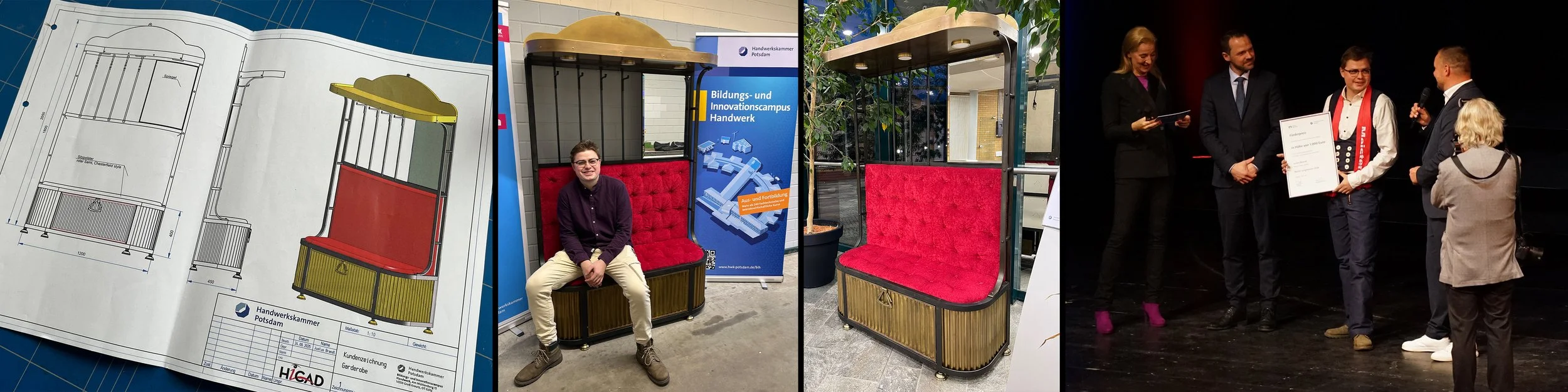
After completing my internships I enrolled in what’s known in Germany as the Meisterschule - the Master School for craftspeople. It’s part of Germany’s dual education system and represents the highest formal qualification in a trade. The program takes about 10 months to complete full-time and climaxes in the creation of the Meisterstück (Masterpiece), a final graduation project of sorts.
Think of it as a mix between vocational college and small business school, focused on giving craftspeople the tools to start their own workshop, train apprentices, and handle the administrative side of the trade.
I was awarded “best young master of 2026” amongst 232 graduates across all trades within my chamber of crafts.
Moving Forward
2026 onwards
With my formal training now behind me, I’m now working tirelessly to set up my own workshop - a space where I can fully bring my ideas to life. There’s still a lot of renovation to be done to the old building which I’ve bought for that purpose, but I expect that by the end of 2026 I’ll be ready to officially open.
From there, I plan to offer restoration and casting services as a contractor, while also developing original artworks of my own.
Over time, I hope to expand into a line of functional pieces - lamps, furniture, and more - inspired by Elvish design.
Where exactly this path will lead, I can’t say. But I do know I want to keep building things that are made to last.